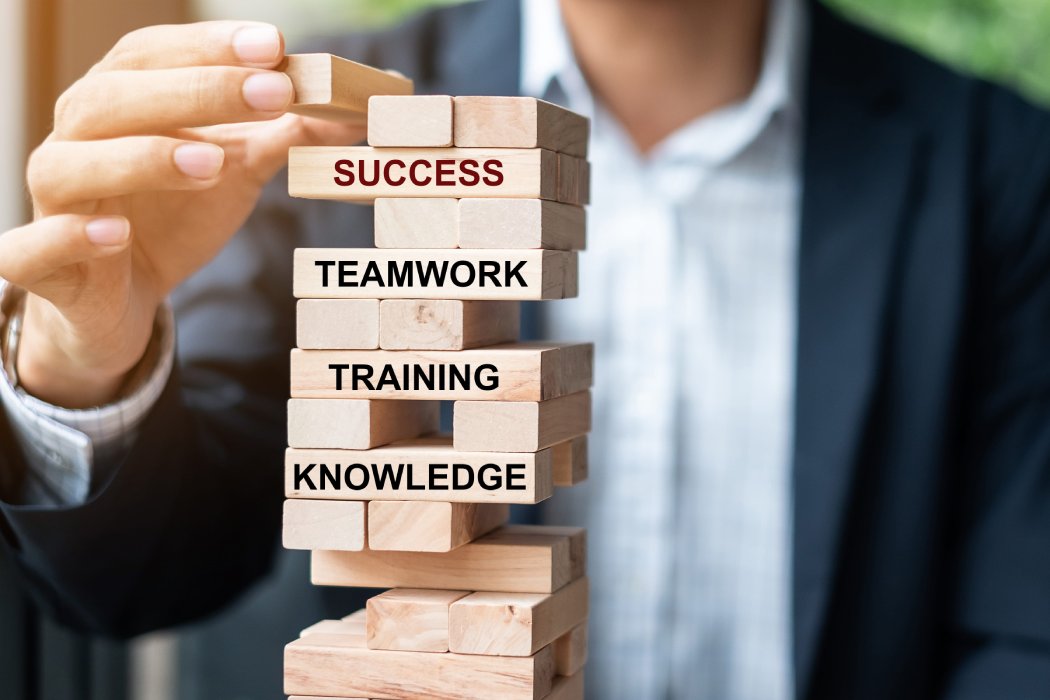
Unlike traditional training sessions, an AI hackathon challenges employees to learn by doing. Participants collaborate across departments, experiment with real AI tools, and work toward solving actual business problems. The hands-on nature of these events helps employees gain confidence much faster than passive learning alone.
An AI hackathon brings cross-functional teams together to solve real business challenges using AI in a structured, time-boxed format. When done well, these events accelerate AI adoption, uncover new business opportunities, and help employees develop practical AI skills they can immediately apply at work.
Organizations often see the strongest results when hackathons are part of a broader AI enablement strategy that includes structured programs like Teamland's AI First® training and ongoing AI training for employees and businesses.

Why Should Your Company Run an AI Hackathon?
AI hackathons create a safe environment for employees to learn by doing. Instead of passively consuming information, participants apply AI tools to actual business challenges.
These events help organizations:
- Build AI confidence across teams
- Identify internal AI champions
- Encourage cross-functional collaboration
- Generate practical AI use cases
- Accelerate AI adoption across departments
Hackathons also help demystify AI. Employees who may initially feel intimidated by emerging technologies gain firsthand experience and often leave with a much clearer understanding of where AI can support their work.
When marketing, operations, finance, customer service, and IT teams collaborate on AI projects, they bring different perspectives to the table. This cross-functional approach often produces more creative solutions than any one department could generate independently.
For companies building long-term AI capabilities, combining hackathons with corporate AI training programs helps reinforce learning and improve adoption after the event ends.
What Goals Should You Set Before Launching an AI Hackathon?
Before planning logistics, define what success looks like.
Some organizations use hackathons primarily for employee upskilling. Others focus on generating implementable business solutions. Some want both.
Common objectives include:
- Increasing AI literacy
- Discovering workflow automation opportunities
- Building AI-powered prototypes
- Improving employee confidence with AI tools
- Identifying future AI leaders inside the company
Establish measurable outcomes early so you can evaluate the event's effectiveness afterward.
Useful metrics include:
- Number of AI use cases generated
- Employee confidence scores before and after the event
- Potential time savings identified
- Number of prototypes created
- Solutions selected for implementation
According to the Stanford AI Index, enterprise AI adoption continues to grow rapidly, making workforce AI literacy an increasingly important competitive advantage.
What Format Works Best for an Internal AI Hackathon?
The right format depends on your audience and goals.
Half-Day Hackathons
Ideal for AI beginners who need exposure to core concepts and tools. These events focus on learning fundamentals and creating simple prototypes.
Full-Day Hackathons
Provide enough time for teams to build meaningful prototypes and explore business applications in greater depth.
Multi-Day Hackathons
Best suited for organizations with existing AI maturity that want participants to develop more advanced solutions.
You should also decide whether the event will be:
- In-person
- Virtual
- Hybrid
Each format has advantages, but facilitation becomes increasingly important as teams become more distributed.
How Do You Create Effective AI Challenge Themes?
The best hackathons focus on real business problems.
Avoid broad prompts such as "Use AI to improve productivity."
Instead, create challenges tied to specific outcomes, such as:
- Reducing customer support response times
- Improving internal knowledge sharing
- Streamlining onboarding processes
- Automating repetitive reporting tasks
- Increasing sales efficiency
Clear problem statements help teams stay focused and produce more actionable solutions.
A strong challenge statement should clearly define the problem, outline any constraints, and explain what success looks like. This keeps teams aligned and prevents projects from becoming overly broad.
How Should You Structure Teams?
Team composition has a major impact on outcomes.
Aim for teams of three to five participants with a mix of:
- Business expertise
- Functional knowledge
- Technical comfort levels
- Different department perspectives
Cross-functional teams often generate stronger solutions because they approach challenges from multiple angles.
Whenever possible, pre-assign teams rather than allowing employees to form groups based solely on existing relationships.
If many participants are new to AI, try placing at least one person with prior AI experience on each team. This helps reduce bottlenecks and ensures every group has someone who can help troubleshoot common issues.
Which AI Tools Should Participants Use?
Most organizations should prioritize accessible tools that employees can continue using after the event.
Common choices include:
- ChatGPT
- Claude
- Gemini
- Microsoft Copilot
Before the event:
- Verify access for all participants
- Review security requirements
- Establish data-sharing guidelines
- Prepare sample datasets if necessary
The goal is to remove friction so teams can focus on solving problems rather than troubleshooting access issues.
For responsible AI guidance, organizations can review the NIST AI Risk Management Framework before launching AI experimentation programs.
Organizations should also establish clear guidelines around data privacy and acceptable AI use. Employees should understand what company information can and cannot be shared with AI tools during the event.
Why Does Facilitation Matter So Much?
A skilled facilitator often determines whether a hackathon becomes a productive learning experience or a frustrating one.
Strong facilitators help participants:
- Scope projects appropriately
- Improve prompting techniques
- Overcome technical roadblocks
- Stay aligned with business goals
- Maintain momentum throughout the day
Many teams enter a hackathon with ambitious ideas but little experience translating those ideas into practical AI solutions. Without guidance, participants often spend too much time planning and not enough time building.
Facilitators help teams narrow their focus, prioritize achievable goals, and continue making progress when obstacles arise.
Organizations running larger events should consider assigning one facilitator for every four to six teams. This provides enough support without creating dependency.
This is especially important when many participants are new to AI. Organizations that want to strengthen AI readiness before launching a hackathon often invest in AI innovation workshops to help employees develop practical problem-solving skills.
Research from McKinsey has consistently shown that organizations that invest in AI capability building are more likely to generate measurable business value from AI initiatives.

What Does a Successful AI Hackathon Agenda Look Like?
One of the most common mistakes is underplanning the event schedule.
Participants need enough structure to stay focused while still having freedom to experiment.
Sample Full-Day AI Hackathon Agenda
This framework can be expanded or shortened depending on your audience and goals.
How Should You Judge AI Hackathon Projects?
Establish judging criteria before the event begins and share them with participants.
Typical evaluation categories include:
- Business impact
- Creativity
- Feasibility
- User experience
- Quality of AI implementation
- Presentation effectiveness
Use a scoring rubric to improve consistency across judges.
Sample Judging Rubric
Include representatives from leadership, operations, technology, and business functions whenever possible.
A diverse judging panel helps evaluate projects from multiple perspectives while increasing organizational buy-in for winning ideas.
How Can You Prepare Participants Before the Event?
Preparation dramatically improves outcomes.
One to two weeks before the event, share:
- AI tool tutorials
- Prompt templates
- Challenge descriptions
- Example use cases
- Event logistics
You may also want to offer a short AI fundamentals session beforehand.
Organizations looking to build a stronger foundation before an event often start with Best Corporate AI Training Programs for Business Leaders and How an Innovation AI Workshop Can Transform Your Organization's Way of Working to help employees become comfortable with AI concepts before the hackathon begins.
How Do You Manage Technical Setup and Support?
Technical issues are inevitable.
Reduce risk by:
- Testing tools before the event
- Creating backup plans
- Providing dedicated technical support
- Preparing alternative AI platforms if outages occur
For hybrid or virtual events, collaboration tools like Miro and Mural can help teams work together effectively.
Assigning a dedicated support person allows facilitators to focus on coaching teams while technical issues are resolved quickly.
How Do You Keep Participants Engaged Throughout the Day?
Energy naturally fluctuates during hackathons.
To maintain engagement:
- Schedule regular team check-ins
- Celebrate progress milestones
- Keep presentations concise
- Provide breaks throughout the day
- Encourage healthy competition
Facilitators should circulate frequently and help teams avoid getting stuck.
Small moments of recognition throughout the day can also boost motivation. Celebrating progress, not just final outcomes, helps maintain momentum and encourages experimentation.
What Should Teams Present at the End?
A simple presentation structure works best:
- Business problem
- Proposed AI solution
- Live demonstration
- Expected impact
- Recommended next steps
Encourage teams to show working prototypes whenever possible.
Practical demonstrations tend to resonate more strongly than presentation slides alone.
Presentation time should typically be limited to three to five minutes per team to maintain energy and keep judging manageable.
How Should You Measure AI Hackathon Success?
The most successful organizations measure both learning outcomes and business outcomes.
Consider tracking:
- Employee AI confidence scores
- Number of use cases generated
- Prototypes developed
- Solutions implemented
- Adoption rates after the event
These metrics help demonstrate ROI and support future AI initiatives.
The most meaningful measure of success is often what happens after the event. Organizations that implement winning ideas and continue investing in AI learning typically see the strongest long-term returns.
What Happens After the Hackathon Ends?
Many organizations lose momentum after the event.
To avoid this:
- Send a recap within 48 hours
- Highlight winning solutions
- Share key learnings
- Assign implementation owners
- Create follow-up learning opportunities
Hackathons should be viewed as part of a larger AI transformation effort rather than a standalone event.
One effective strategy is identifying AI champions from among the participants. These employees can help support colleagues, share best practices, and encourage continued AI experimentation across departments.
The most successful organizations continue building on hackathon momentum through ongoing training, office hours, workshops, and communities of practice.
Common AI Hackathon Challenges and How to Solve Them
Employees Feel Intimidated by AI
Provide beginner-friendly challenges, training resources, and supportive team structures.
Teams Spend Too Much Time Planning
Introduce milestones that require participants to demonstrate progress throughout the day.
Technical Problems Slow Momentum
Build buffer time into the schedule and prepare backup tools.
Energy Drops Mid-Afternoon
Use breaks, progress reviews, and facilitator engagement to re-energize participants.
Frequently Asked Questions
How long should an AI hackathon last?
Most corporate AI hackathons run between four hours and two full days. Half-day events work well for beginners, while full-day and multi-day events allow for more sophisticated solution development.
What AI tools are best for a company hackathon?
ChatGPT, Claude, Gemini, and Microsoft Copilot are typically the best options because they are accessible, widely adopted, and easy for non-technical employees to use.
How many employees should participate in an AI hackathon?
Most successful internal hackathons involve 15 to 60 participants organized into teams of three to five people.
Can non-technical employees participate in an AI hackathon?
Absolutely. Many of the most valuable solutions come from employees who understand business challenges deeply, even if they do not have technical backgrounds.
How much does it cost to run an AI hackathon?
Costs typically range from $5,000 to $25,000, depending on facilitator fees, participant count, venue requirements, software access, and prizes.
What should happen after the hackathon?
Organizations should follow up quickly, support implementation efforts, create ongoing learning opportunities, and measure adoption over time.
How do you judge AI hackathon projects fairly?
Use predefined scoring criteria, a structured rubric, and a diverse judging panel that represents multiple departments.
Can remote teams participate in AI hackathons?
Yes. Virtual and hybrid hackathons can be highly effective when supported by collaboration platforms, clear facilitation, and regular check-ins.